 University of North Texas



Tiny Chips, Big Impact
How UNT's alumni keep the semiconductor industry running.
September 29, 2025
Semiconductor chips are the building blocks of all electronics -- from our nation's defense systems and artificial intelligence to your smartwatch and tablet. In a world increasingly reliant on technology, semiconductors and manufacturing breakthroughs are more important than ever to create faster and more reliable computer systems.
There have been moves on the federal and state level to boost the country's semiconductor industry. In 2022, the U.S. Congress passed the CHIPS Act, approving $52 billion in new funding to advance domestic research and manufacturing of semiconductors. The Texas Legislature passed its own CHIPS Act in 2023, which included the formation of a group of experts from multiple universities, including UNT, to advise the state on its strategic planning to secure Texas' leadership in semiconductors.
To further fuel research on semiconductors, UNT launched the Center for Microelectronics in Extreme Environments (CMEE) in 2024, but UNT researchers have long been working to shape the next generation of semiconductors, in part by mentoring the next generation of scientists and engineers. Alumni from UNT are currently spread across the state and country working to make a difference in the industry and develop the next innovation in semiconductors.
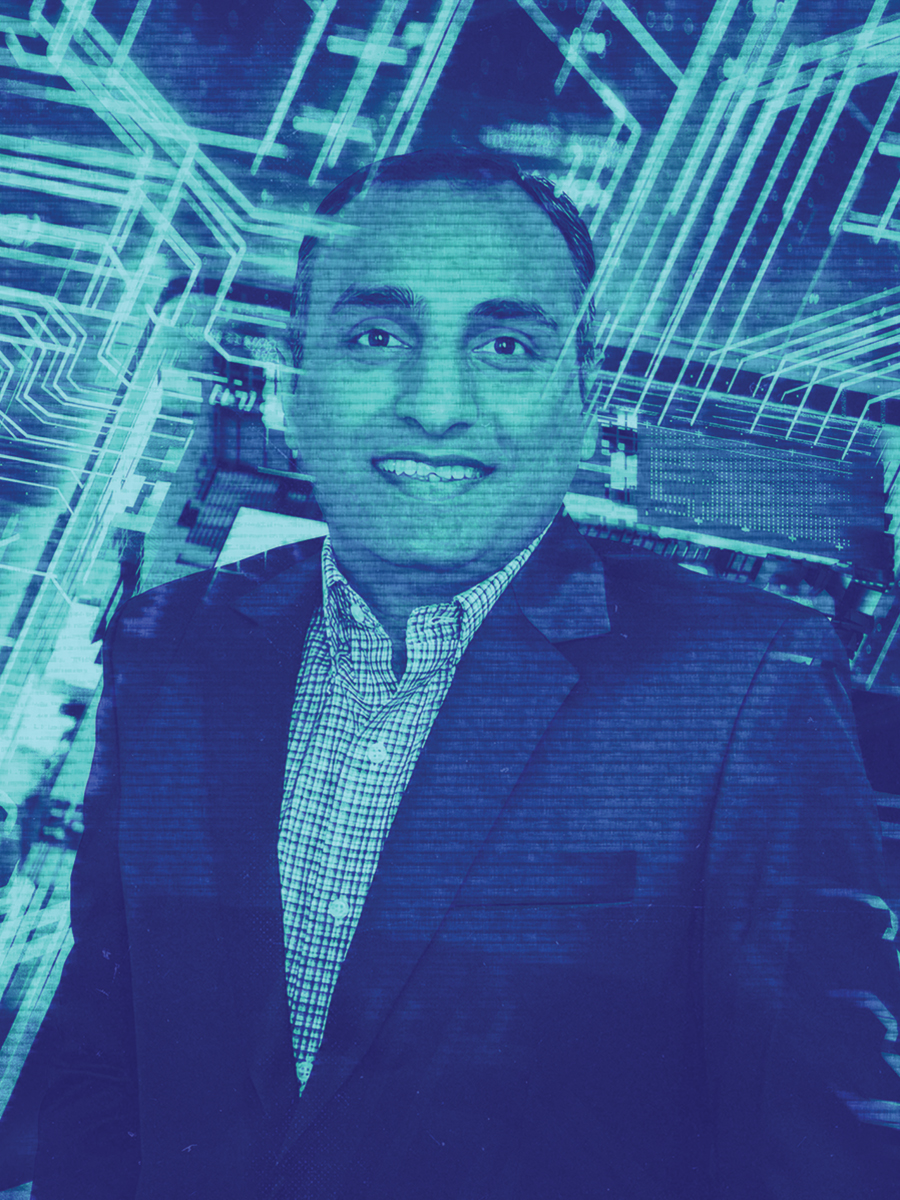
Mumukshu Patel ('17 Ph.D.)
Mumukshu Patel
Before you can have a semi-conductor chip for your computer, you start by creating a cylindrical silicon ingot by the melting of sand through a multi-step process. That ingot then gets sliced into thin wafers, which become the foundation on which chips are built.
Mumukshu Patel ('17 Ph.D.) and his team makes sure those wafers are perfectly smooth through a process called chemical mechanical planarization so the chips can reliably be printed on them. He works at Intel in Oregon as a senior technology and development module engineer.
"We do a lot of metals and oxide polish, but because our process is so complicated, it leaves a lot of defects," Patel says.
"So, then we introduce and optimize rinsing, brushing and chemical slurries to clean it up and that's how you have a wafer with minimum defect density."
Patel's team is tasked with developing the best planarization process on a small scale that can then be replicated on a larger one. As a senior engineer, he also collaborates with the vendors who make the tools his team uses for the process.
"We are the people who work on those instruments day and night," he says, "so we work with vendors to develop next generation process technology."
Patel has guided and mentored many UNT students -- helping them with resumes and practice interviews and serving as a reference -- as a way to give back after receiving guidance not only from his advisor, Distinguished Research Professor Wonbong Choi in the Department of Materials Science and Engineering, but also from everyone in the department.
"I really appreciate the relentless effort of each professor there," Patel says. "They are the best people to advise you on a project. The amount of attention they give to each student is commendable."
Patel wants students coming from UNT to know that their experience matters.
"It's hard to compete with students from famous universities unless you have a strong background in academia and good mentors like I had at UNT," he says. "The foundation you build there is really valued at the industry level."
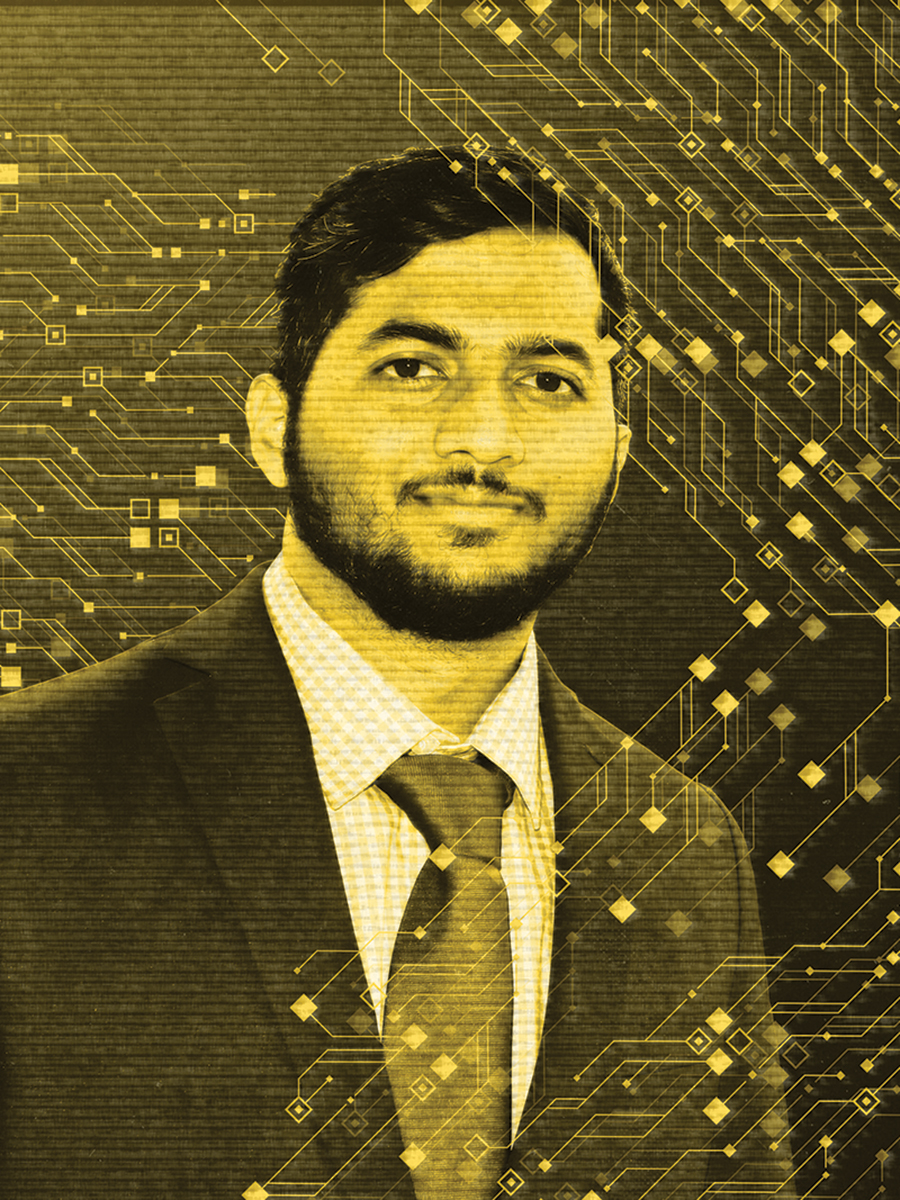
Ashish Shivaji Salunke ('22 Ph.D.)
Ashish Shivaji Salunke
After a clean wafer is formed, it's sent off to the next phase where small layers of metals are added on top. Those layers are then exposed to ultraviolet light to form patterns onto the wafer.
That's where Ashish Shivaji Salunke ('22 Ph.D.) and his team come in. He currently works as a photomask clean process engineer lead at Micron Technology in Boise, Idaho. He and his three team members make sure those patterns, called photomasks, are perfectly etched onto the wafer.
"Think of the photomask as a stencil you use to draw the pattern," Salunke says. "When you radiate it with deep UV light, it generates the patterns that become your circuits. Those circuits impact your device's performance and reliability."
Salunke credits his ability to lead his team to his time in Oliver Chyan's lab in the College of Science, where he earned a doctoral degree in analytical chemistry. While there, he worked on multiple projects related to the semiconductor industry. However, he's most thankful for the soft skills he learned at UNT.
"He taught that it's important to work on multiple ideas and to collaborate," Salunke says. "I always had a co-lead for any project I led, or I would co-lead for someone else's project. My team now collaborates with each other all the time and those values I learned have been really helpful."
His final lesson from Chyan helped Salunke finish his thesis and is also something he believes applies to anyone in the semiconductor industry.
"I struggled to connect the dots across all my projects, but Dr. Chyan helped me see the bigger picture. If you can do that -- tell the story -- you can lead any project to success."
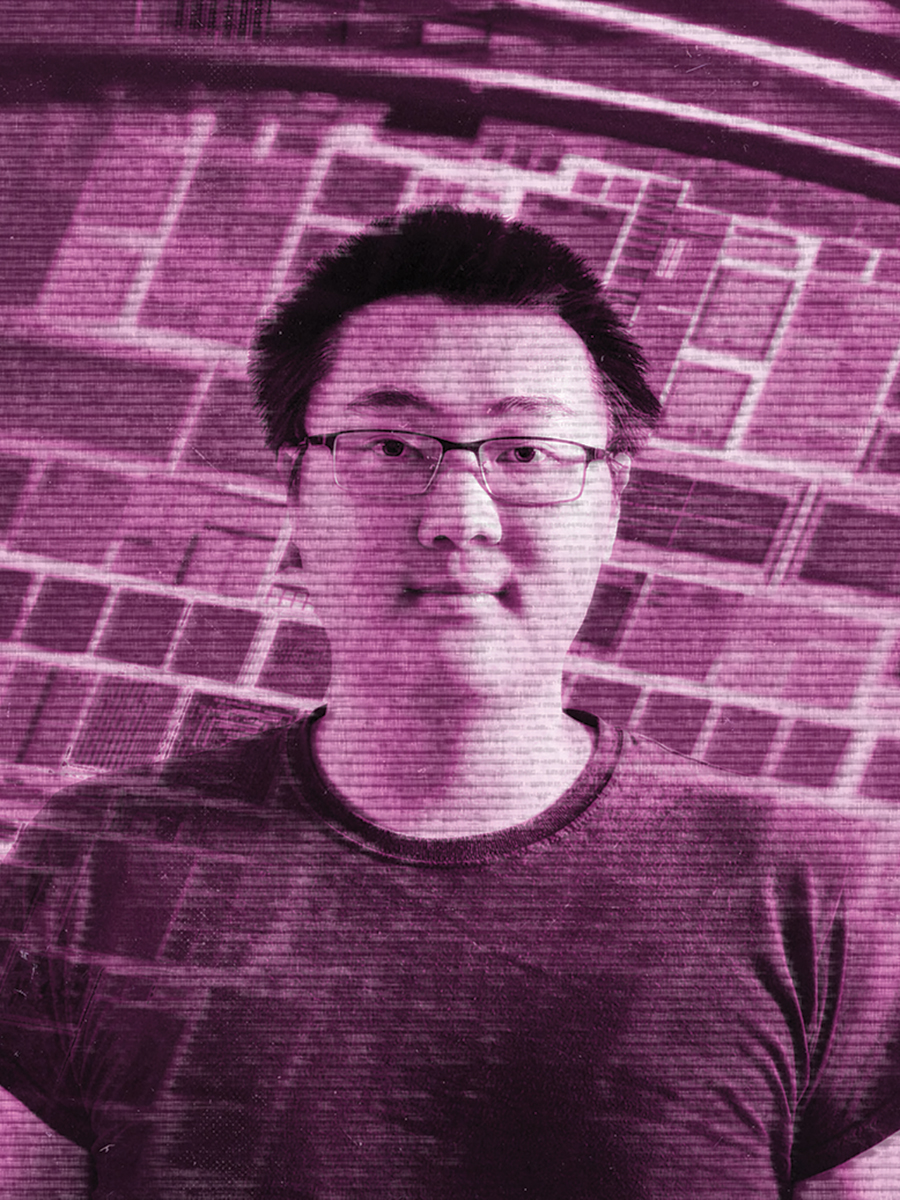
Daniel Li ('18 TAMS)
Daniel Li
Creating semiconductors doesn't happen in a vacuum. Before chips are printed, their designs must be tested and perfected. Daniel Li ('18 TAMS) is a central processing unit, or CPU, verification engineer for Intel in Austin and plays a part in that process. He ensures that computer processors function correctly before being manufactured.
"A chip operates on complex code composed of logical functions and we make sure there aren't any bugs in it before it goes to print," Li says.
A bug might be a function saying that two plus two equals five. Li's job is to track down the problem and then work with the program designers to fix it. Knowing one bug could cost millions of dollars illuminates how crucial the work is.
"I'm not in the fabrication labs where they're created, but what I do leads up to the eventual creation of the chip," he says. "We make sure they're designed correctly, so we don't waste materials and time reprinting."
Li is a graduate of the Texas Academy of Mathematics and Science at UNT. The program is an early college entrance residential program for high school aged students. Once admitted, students withdraw from their high school and get a jump start on their time in college. While at UNT, he was a member of the lab of Xiaohui Yuan, computer science and engineering associate professor.
"Listening to weekly research discussions helped me learn which ideas were worth pursuing," Li says.
"It taught me collaboration and problem solving."
Li went on to earn a bachelor's degree in electrical and computer engineering from the University of Texas at Austin in 2021. He joined Intel after interning there during his final semester and offers advice to new grads.
"It's important to figure out ifthe team you're joining values teaching newcomers. Find one that builds up your skills and wants you to succeed."
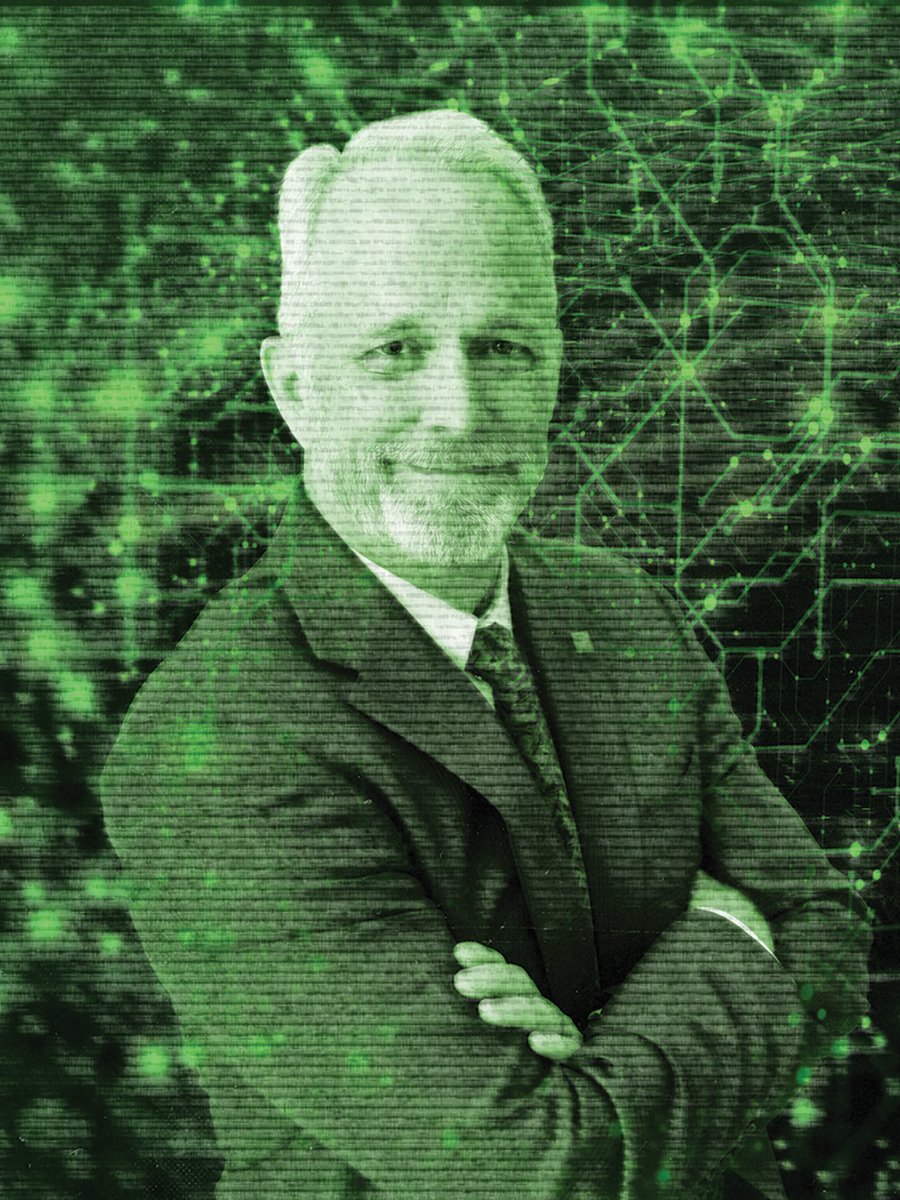
Trace Hurd ('05 Ph.D.)
Trace Hurd
Trace Hurd ('05 Ph.D.) has seen multiple aspects of the industry throughout his 30-year career. He currently works as senior director of technology at Tokyo Electron in Austin.
"I've never been bored. I've been solving new puzzles every day for 35 years," Hurd says. "Plus, I'm literally working with some of the smartest people on the planet."
Hurd got his start working with Texas Instruments in 1989. He then joined UNT's Ph.D. program in the 1990s thanks to encouragement from his managers and a research collaboration between Texas Instruments and chemistry professor Oliver Chyan.
"I was working overseas at the time, but Oliver was willing to take on a nontraditional student," Hurd says. "His key characteristic that I appreciate is that he always prioritizes his students and makes sure they have the right experience."
Reflecting on his time in the industry, Hurd says going through the program gave him a better grasp of his role in the process of chip creation and technological research.
"Being able to go back and go a little deeper into the background and details of my field was helpful. I still have those textbooks on my shelf."
Hurd says the semiconductor industry has three major components: the materials companies that provide the needed metals and chemicals, the companies that make the chips that go into gadgets, and the companies that make the manufacturing machines those companies use. Thanks to his chemistry background, he's been able to work in each sector.
"Being a chemist, you can move around as you want to," Hurd says.
He is now in that third component, overseeing a large team at Tokyo Electron that helps design and process the next generation of manufacturing tools.
"For several years now, we've been focused on building a physics-based simulation of a real-world tool that'll save resources," Hurd says. "It's been a wonderful thing working on the next challenge, solving the next problem, and there's nothing routine about it."