- 03/29/2024 12:00:00 AMUnderstanding Cotton PlantsCollege of Science faculty are working to increase the resiliency and productivity of cotton.Heather NoelAhna Hubnik
 College of Science, Department of Biological Sciencesstory
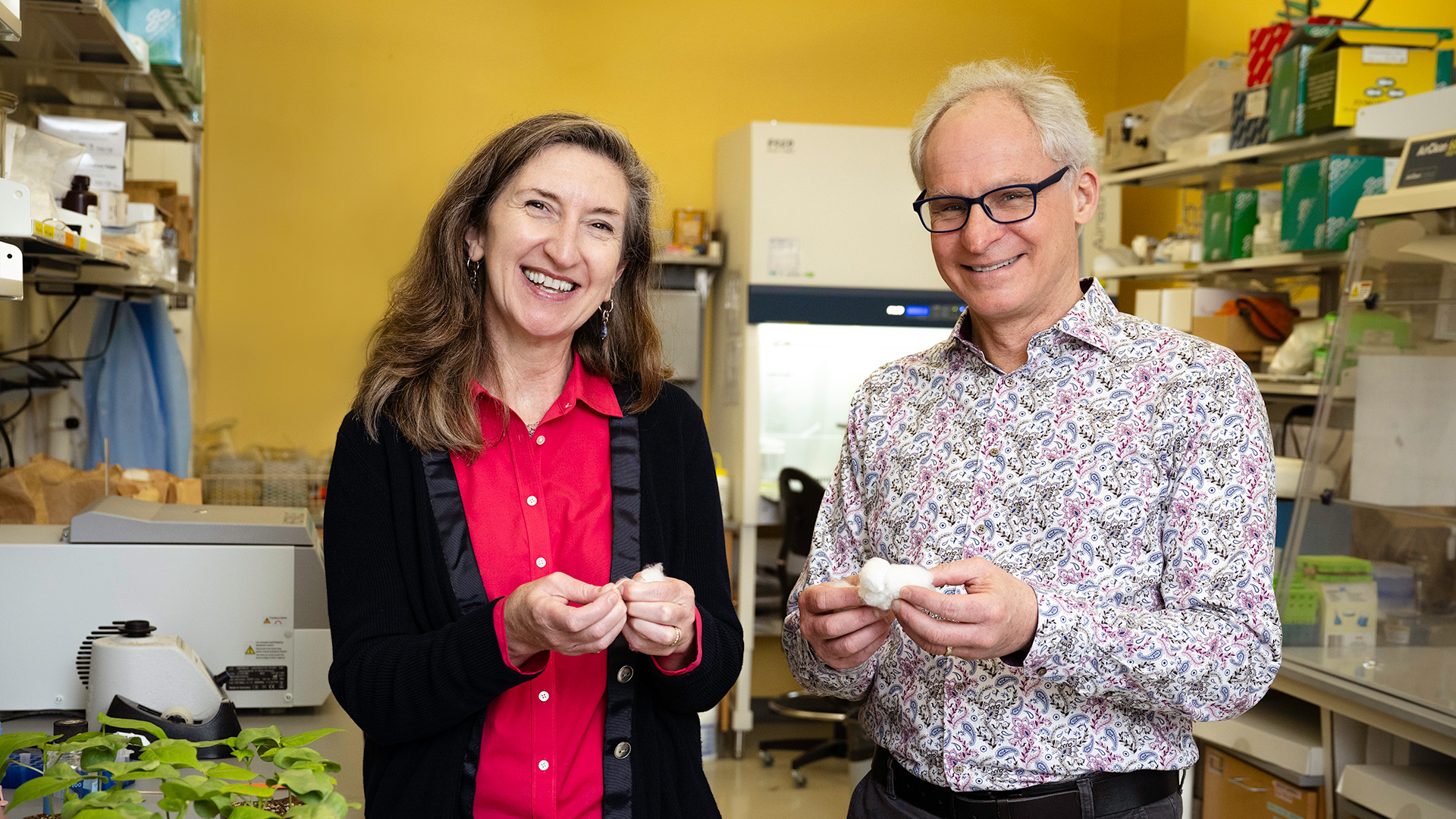
College of Science faculty Brian Ayre and Roisin McGarry (pictured) are researching ways to increase the resiliency and productivity of cotton with a U.S. Department of Agriculture grant they earned based on their innovative project proposal and UNT's designations as a Hispanic- and Minority-Serving Institution. They are focusing specifically on cotton bast fibers, which develop in the phloem or "inner bark" of the plant's stem. Cotton bast fibers are an underutilized part of the cotton plant that could hold immense potential for industrial applications, such as an alternative to synthetic fiber derived from fossil fuels. Knowing more about these fibers can help cotton producers make informed decisions about the economic viability of the plant tissue and its possible applications.
College of Science, Department of Biological Sciencesstory
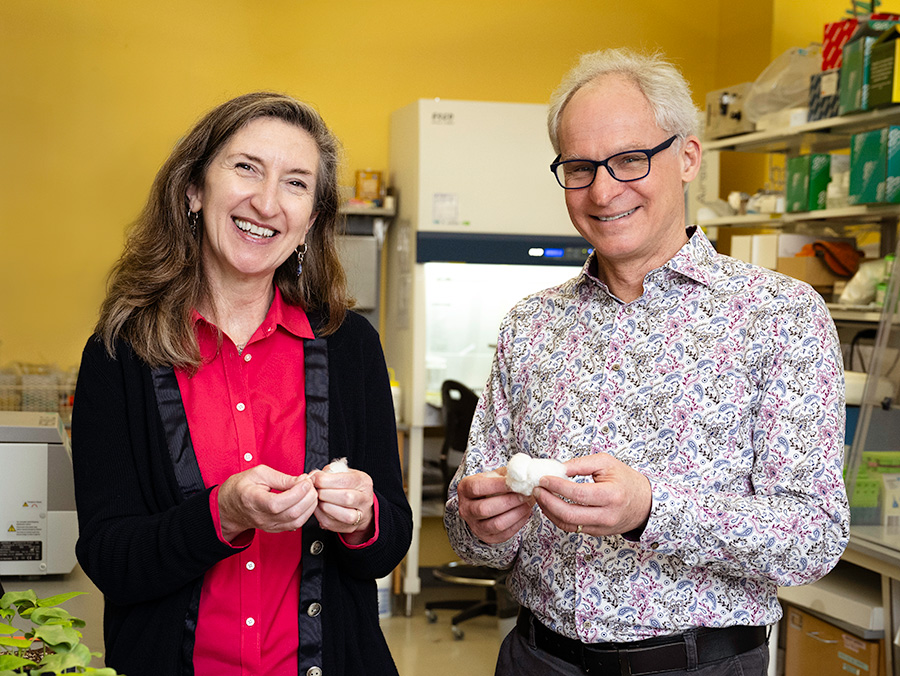
College of Science faculty Brian Ayre and Roisin McGarry (pictured) are researching ways to increase the resiliency and productivity of cotton with a U.S. Department of Agriculture grant they earned based on their innovative project proposal and UNT's designations as a Hispanic- and Minority-Serving Institution. They are focusing specifically on cotton bast fibers, which develop in the phloem or "inner bark" of the plant's stem. Cotton bast fibers are an underutilized part of the cotton plant that could hold immense potential for industrial applications, such as an alternative to synthetic fiber derived from fossil fuels. Knowing more about these fibers can help cotton producers make informed decisions about the economic viability of the plant tissue and its possible applications.