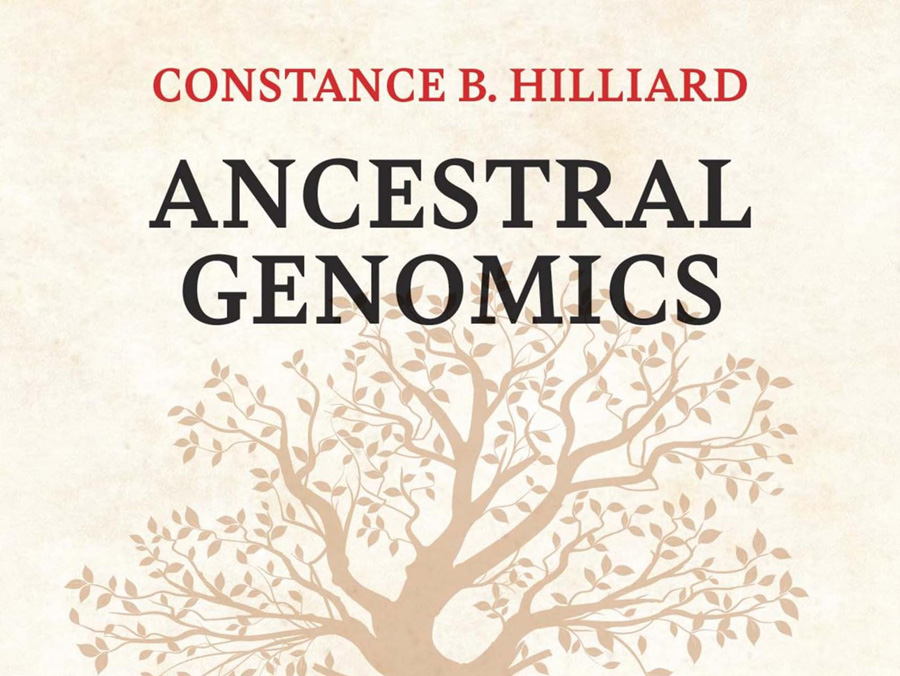
- 10/04/2024 12:00:00 AMAncestral GenomicsA health scare set Constance B. Hilliard on a quest for information.
 BooksCollege of Liberal Arts and Social Sciences, Department of Historystory
"Few African American families are without members or friends who have not suffered from diseases such as salt-sensitive hypertension and kidney failure," history professor Constance B. Hilliard says. She came face to face with this fact when she was misdiagnosed with renal failure while living in Japan. After an American doctor established that she did not have kidney disease -- because her race affected her bloodwork -- she set out on a decade-long quest to address race as a measure of health in genomic medicine. "The knowledge that these disorders may be preventable in some cases could be a Black health game-changer."
Read more about Constance B. Hilliard’s book.
BooksCollege of Liberal Arts and Social Sciences, Department of Historystory
"Few African American families are without members or friends who have not suffered from diseases such as salt-sensitive hypertension and kidney failure," history professor Constance B. Hilliard says. She came face to face with this fact when she was misdiagnosed with renal failure while living in Japan. After an American doctor established that she did not have kidney disease -- because her race affected her bloodwork -- she set out on a decade-long quest to address race as a measure of health in genomic medicine. "The knowledge that these disorders may be preventable in some cases could be a Black health game-changer."
Read more about Constance B. Hilliard’s book.