- 03/22/2019 12:00:00 AMSeed Oil ResearchUNT associate professor of biology leads research project to study a unique type of seed oil.
 Campus NewsCollege of Arts & Sciences, Department of Biological Sciencesstory
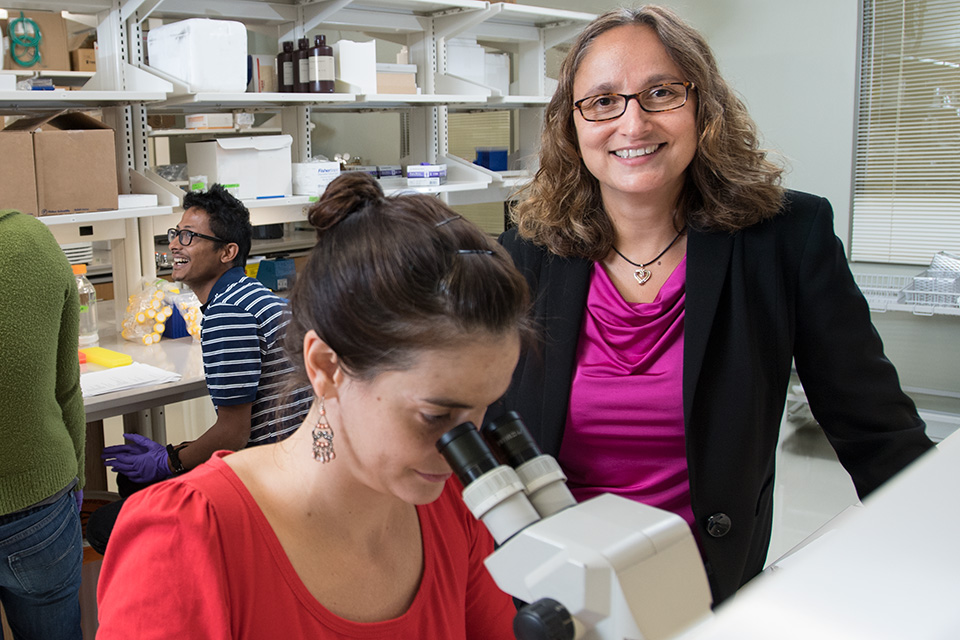
Ana Alonso, an associate professor of biology, is leading a research project that examines a unique type of seed oil produced by the pennycress plant. (Photo by Ahna Hubnik)
Ana Alonso, associate professor of biology, is leading a research project to study a unique type of seed oil produced by the pennycress plant. The research is supported by the Department of Energy Office of Biological and Environmental Research.
Alonso, who also is a member of UNT's BioDiscovery Institute, is attempting to optimize the amount of seed oil produced per plant through traditional cross-breeding methods and bioengineering. When properly processed, the common pennycress can produce 100 gallons of oil per acre and can be further processed into aviation fuel.
Growing pennycress also could one day provide farmers with a biodiesel money crop in winter fields that are normally empty.
Campus NewsCollege of Arts & Sciences, Department of Biological Sciencesstory
Ana Alonso, an associate professor of biology, is leading a research project that examines a unique type of seed oil produced by the pennycress plant. (Photo by Ahna Hubnik)
Ana Alonso, associate professor of biology, is leading a research project to study a unique type of seed oil produced by the pennycress plant. The research is supported by the Department of Energy Office of Biological and Environmental Research.
Alonso, who also is a member of UNT's BioDiscovery Institute, is attempting to optimize the amount of seed oil produced per plant through traditional cross-breeding methods and bioengineering. When properly processed, the common pennycress can produce 100 gallons of oil per acre and can be further processed into aviation fuel.
Growing pennycress also could one day provide farmers with a biodiesel money crop in winter fields that are normally empty.